


7 Basic Facts About Konstantin Stanislavski
The father of modern acting
(By Jim Webb)
RELATED TOPICS:
Konstantin Stanislavski: “There are no small parts, only small actors.”
What is the Stanislavski System?
15 Brilliant Quotes by Konstantin Stanislavski
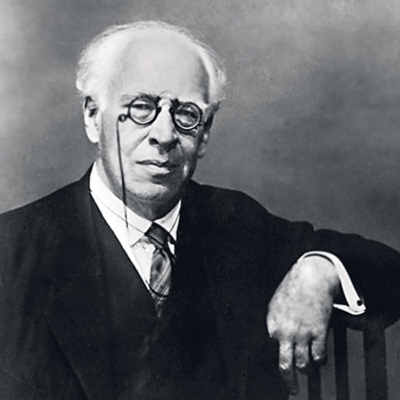
Konstantin Stanislavski was the most influential person in the history of modern acting theory. His experiences as an actor, teacher and stage director drove him to search for a system of techniques an actor could use to consistently deliver truthful performances.
His work planted the seeds upon which nearly all major modern acting techniques and systems are based. He truly is the father of modern acting in the U.S. and around the world!
Though he died nearly a century ago, his work lived on in the performances of some of our greatest actors. Marlon Brando, Al Pacino, James Dean, Robert DeNiro, Meryl Streep – you name it! They all have been influenced, either directly or indirectly by the work of Stanislavski.
Here are seven basic facts about the great teacher:
#1: Stanislavski is the father of most modern acting techniques
Whether you are “Meisner” or “Method” or draw influence from the teachings of Stella Adler, Uta Hagen or others, you are likely studying an offshoot of Stanislavski’s work. Nearly all the influential acting teachers of the 20th Century drew inspiration from the work of Konstantin Stanislavski. In fact, many of them trained under him directly.
“There are no small parts, only small actors.“
(Konstantin Stanislavski)
Popular acting techniques like:
*Relaxation
*Private Moment Exercise
*The Repetition Exercise
*Sense Memory
*Animal Exercises
*The Magic If
*The Substitution Technique
were all inspired directly, or indirectly, by Stanislavski’s ideas.
#2: Stanislavski was not his birth name
Konstantin Stanislavski was born Konstantin Sergeievich Alekseiev. The name “Stanislavski” was actually a stage name that he derived from a retired Polish actor, in order to save his family name from embarrassment, as he performed in risqué or hastily thrown-together theater productions. By day, he worked in his family’s business as Konstantin Alekseiev. At night, he would perform under his stage name, Konstantin Stanislavski. The name stuck, and he would continue to use and perform under the name, even after he rose to prominence.
#3: He was a born actor
He began performing in plays at age 7. He created his own circus, “Konstanzo Alekseyev’s Circus” and later a puppet theater. At the age of 14, his father, a wealthy businessman, turned a wing of their home into a theater for Stanislavski to perform his plays.
#4: Stanislavski was a drama school drop-out
The father of most modern acting techniques was, of all things, a drama school drop-out. At age 21, he dropped out of the Imperial Dramatic School of Moscow, because he was disenchanted with the techniques he was being taught and felt they deprived him of his own individuality.
“When an actor is completely absorbed by some profoundly moving objective so that he throws his whole being passionately into its execution, he reaches a state we call inspiration.”
(Konstantin Stanislavski)
He also believed that the techniques being taught only addressed external methods of acting and only focused on the final result, instead of focusing on methods that addressed the actor’s inner soul, as well as techniques and steps an actor could use to achieve that final result.
Explore these Acting Magazine articles to deepen your understanding of Stanislavski and his groundbreaking system:
What Are the 7 Stanislavski Techniques?
What Are Stanislavski’s Core Principles of Acting?
What Is the Magic If?
Who Created the Idea of the Magic If?
7 Basic Facts About Konstantin Stanislavski
What Is Konstantin Stanislavski Best Known For?
Did Stanislavski Say There Are No Small Roles?
“There Are No Small Parts, Only Small Actors” — Konstantin Stanislavski
Konstantin Stanislavski: “Live the Part”
Konstantin Stanislavski: “Do Not Run for the Sake of Running”
When You Play an Evil Man, Look to See Where He Is Good
Love the Art in Yourself, Not Yourself in the Art
What Was Stanislavski’s Most Famous Quote?
The Complete Guide to Acting Techniques (The 2026 Edition)
#5: Stanislavski created a “system”
One of the things that set Stanislavski apart from other teachers was his relentless desire to consistently deliver “truth” in his acting performances. That drive for consistency and truth led him to create what became known as the “Stanislavski System”, or, simply, “the system”.
“To become someone else… What happiness! This condition is paradise for the actor!”
(Konstantin Stanislavski)
His system, a collection of acting techniques, was designed to move actors beyond physical and vocal training as a sole focus. He believed actors should also dive into the inner motives of their character to justify physical and vocal actions. He wanted to remove what he called “blocks” and master the true nature of acting.
#6: Stanislavski helped found the world-renown Moscow Art Theater (MAT)
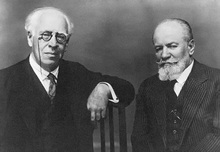
Fed-up with the state of Russian theater – its theatricality, artificiality, staging and décor – Stanislavski, along with business partner, Vladimir Nemirovich-Danchenko, began one of the most influential theaters of the 20th Century. The Moscow Art Theater (MAT) pioneered innovations in theater that became world renown, such as the use of more realistic sets and background and offstage sounds.
#7: Stanislavski authored a manual for actors
Later in his career, Stanislavski sought to bring his collection of ideas on the craft of acting into a manual called, An Actor’s Work. Written in the form of a fictional student’s diary, the manual had to be broken down into three volumes. One volume, An Actor Prepares, focuses on the inner life of the character. The second volume, Building a Character, focuses on outer characterizations that flow from the character’s inner life. The final volume, Creating a Role, focused mainly on the application of his techniques into the rehearsal process.
Related Topics
10 Facts About Konstantin Stanislavski – Explore additional facts about Stanislavski’s life, the Moscow Art Theatre, his acting system and his enormous influence on modern performance.
What Is Konstantin Stanislavski Best Known For? – Learn why Stanislavski is considered the father of modern acting and how his system transformed the way performers approach character and emotional truth.
What Are the 7 Stanislavski Techniques? – Explore seven important elements of Stanislavski’s approach, including objectives, emotional memory, imagination and truthful action.
What Are the 7 Pillars of Stanislavski’s Method? – Discover the major concepts actors can use to build believable characters through Stanislavski-inspired preparation.
What Are Stanislavski’s Core Principles of Acting? – Examine the fundamental ideas behind Stanislavski’s system, including given circumstances, objectives, inner truth, emotional memory and physical action.
What Did Stanislavski Say About Acting? – Explore Stanislavski’s philosophy of acting and his emphasis on truthful behavior, psychological depth and purposeful physical action.
What Was Stanislavski’s Most Famous Quote? – Learn about the sayings most closely associated with Stanislavski and how they reflect his beliefs about commitment, ensemble work and truthful acting.
Did Stanislavski Say There Are No Small Roles? – Investigate the famous idea that every role matters and how it connects to Stanislavski’s approach to ensemble acting.
“There Are No Small Parts, Only Small Actors” — Konstantin Stanislavski – Explore the meaning behind one of the most famous quotations associated with Stanislavski and why he expected total commitment from every performer.
Konstantin Stanislavski: “Live the Part” – Read Stanislavski’s ideas about experiencing a role truthfully each time it is performed rather than mechanically reproducing a rehearsed result.
An Actor Prepares: A Review – Explore Stanislavski’s landmark acting book and its lessons on imagination, emotional truth, concentration and preparation.
Creating a Role: A Review – Examine Stanislavski’s approach to developing a complete character through psychological motivation, physicality and detailed script analysis.
What Is the Moscow Art Theater (MAT)? – Learn about the theater Stanislavski co-founded and how it became the birthplace of many of his revolutionary acting ideas.
What Is the Magic If? – Discover Stanislavski’s famous technique of asking what you would do if you were living under your character’s circumstances.
Who Created the Idea of the Magic If? – Learn how Stanislavski developed the Magic If to help actors connect their imaginations with fictional situations.
What Is the Magic If Technique Used In? – Explore how actors use the Magic If to produce more personal, believable and emotionally grounded performances.
What Are the Given Circumstances? – Learn how actors analyze the facts of a script, including time, place, relationships and environment, to understand how a character should behave.
Acting Technique: The Given Circumstances – Take a deeper look at one of Stanislavski’s central tools for grounding a performance in the reality of the script.
What Are the 5 W’s of Acting? – Use questions about who, what, where, when and why to define a character’s given circumstances and strengthen performance choices.
What Is an Objective? – Learn how defining what a character wants gives an actor a clear purpose and creates stronger, more active performances.
What Is an Actor’s Objective? – Explore how character goals drive behavior, dialogue and actions from moment to moment within a scene.
What Is the Super-Objective? – Discover Stanislavski’s concept of the overarching goal that guides a character throughout an entire play or film.
What Is Emotional Memory in Acting? – Explore the Stanislavski-inspired technique of drawing on remembered emotions to deepen a character’s emotional life.
What Is Affective Memory? – Learn about one of Stanislavski’s early techniques and how it later became central to Lee Strasberg’s version of Method Acting.
What Is Sense Memory in Acting? – Discover how actors use recalled sights, sounds, smells, tastes and physical sensations to create believable experiences onstage or on camera.
What Is a Sense Memory? – Explore how sensory recall can help actors make imaginary circumstances feel physically real.
What Is Sense Memory? – Learn how actors can recreate sensory experiences from their own lives to strengthen emotional and physical truth in performance.
What Is Method Acting? – Trace Method Acting back to Stanislavski’s system and learn how American teachers later adapted his ideas.
5 Basic Facts About Method Acting – Explore how Stanislavski’s system influenced the development of Method Acting and the controversial use of affective memory.
Why Is It Called Method Acting? – Learn how Stanislavski’s system evolved into the American Method through teachers such as Lee Strasberg.
What Is the Most Common Acting Style? – Explore how modern realistic acting remains deeply influenced by Stanislavski and the techniques derived from his work.
What Is Realistic Acting Called? – Learn how realism and naturalism in acting developed alongside Stanislavski’s pursuit of psychologically truthful performance.
5 Basic Facts About Lee Strasberg – Discover how Strasberg adapted Stanislavski’s early ideas, particularly affective memory, into his own influential Method Acting approach.
7 Basic Facts About Stella Adler – Learn how Stella Adler studied Stanislavski’s ideas and eventually emphasized imagination over personal emotional memory.
What Is the Stella Adler Acting Method? – Explore how Adler’s technique grew out of Stanislavski’s work while placing greater emphasis on imagination, script analysis and the world of the character.
What Is the Meisner Technique? – Discover how Sanford Meisner developed his own approach to truthful behavior after being influenced by the broader Stanislavski tradition.
What Acting Technique Do Most Actors Use? – Compare Stanislavski-inspired approaches including Method Acting, Meisner and Stella Adler to see how his influence continues across modern training.
7 Books Every Actor Should Read – Explore essential acting books, including Stanislavski’s An Actor Prepares, that continue to shape the way performers learn their craft.

Acting Magazine Newsletters
Never miss out on the best from Acting Magazine.