


What was Stanislavski’s most famous quote?
_Unpacking the words, the man, and the enduring power behind one line._
(By Carmichael Phillip)
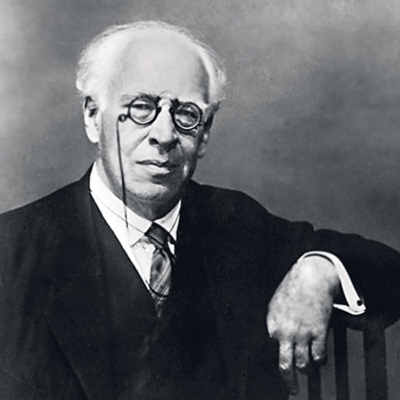
(Konstantin Stanislavski)
#1 Why we search for “the most famous quote”
When we think of Konstantin Stanislavski (also spelled Stanislavsky) we often recall a handful of memorable lines:
“There are no small parts, only small actors.”
“Love the art in yourself, and not yourself in the art.”
“All action in the theatre must have inner justification, be logical, coherent and real.”
These are widely quoted, frequently pinned on actor‑training boards, and used as short‑hand for his system.
But the question “which is his most famous quote?” is tricky — there’s no definitive single line that stands above all others in scholarly consensus. Instead, the quotes above and others have gained traction. For the purpose of this article I will argue that his most recognisable and widely repeated line is:
“Remember: there are no small parts, only small actors.”
Why this one?
It’s crisp, memorable, and easily digestible.
It’s frequently attributed to him in actor‑training literature.
It encapsulates one of his core ideas: the actor’s stance, no matter the size of the role, matters.
Still, we’ll explore alternative candidates, look at context, and ask: what did Stanislavski mean, and how has his quote grown beyond its original moment?
#2 Who was Konstantin Stanislavski — and why do his words matter?
Born in Moscow in 1863 (as Konstantin Sergeyevich Alekseyev), Stanislavski co‑founded the Moscow Art Theatre in 1898.
Over decades he developed what became known as the “Stanislavski System” (or “Method” in its various offspring) to support actors in achieving authenticity, emotional truth and psychological realism.
His teaching emphasised: given circumstances, the actor’s objectives, inner motivation, the “magic if” question (“If I were in this situation, what would I do?”)
— and the idea that external gesture must flow from inner truth.
Stanislavski’s influence is vast: from his writings such as An Actor Prepares (1936) through to generations of Western actors and acting teachers.
His quotes thus don’t just echo in textbooks: they show up in studios, actor‑workshops, preaching moral‑lessons to performers.
#3 The quote under the microscope: “Remember: there are no small parts, only small actors.”
Let’s examine this line in more detail:
Text: “Remember: there are no small parts, only small actors.”
Attribution: Widely attributed to Stanislavski; appears in quote‑collections and acting‑blogs referencing his writings.
Meaning: The core message is that every part—whether lead or minor—is an opportunity for the actor to bring fullness, commitment and truth. The size of the role does not determine the validity of an actor’s work.
Why it resonates: It gives dignity to ensemble actors, to bit‑parts, to understudies. It invites actors to see value in every moment. It is egalitarian.
How it reflects Stanislavski’s system: In his thinking, an actor must engage with objective, inner life, connection to partner, and truth of circumstances — whether they’re centre‑stage or off‑stage. Making a role small is a choice of attitude, not the part itself.
Furthermore, in acting pedagogy this line is recurring because it is practical and motivational. One reads it and immediately feels: “Yes, I matter.”
#4 Alternate candidates for “most famous quote” and how they compare
While the previous quote is the leanest and most quoted, there are others that might vie for the title. Let’s look at a few:
“Love the art in yourself, and not yourself in the art.”
This speaks more philosophically: an actor should align with the art, not exploit the role for self‑promotion.
It gains traction especially in reflections on ego, celebrity, craft versus fame.
“All action in the theatre must have inner justification, be logical, coherent and real.”
More technical: aligning with his system’s insistence on purpose behind movement and behaviour.
Resonates primarily with acting students rather than the broader public of non‑actors.
“In the language of an actor, to know is synonymous with to feel.”
Deep and less immediately catchy; more appreciated in advanced actor‑training circles.
Why the first quote stands out:
It uses everyday words (“small parts”, “small actors”) rather than specialist language.
It is easily memorizable, easily applied, endlessly referenced in acting culture.
It carries a social‑political dimension: one person’s role may be minor, but their work is major.
Therefore, while it may not be undeniably confirmed as “his most famous” (that kind of superlative is always contestable), it is arguably the line most widely used, cited, and applied.
#5 Why this quote continues to matter for actors and creators
There are several layers to its enduring relevance:
Democratizing roles: In film, television and theatre we tend to lionize leads and stars. This line redirects attention: every role, every actor, every moment on stage matters.
Mindset shift: It invites actors historically in bit‑parts or understudies to bring full presence, not just “fill time until my big chance.”
Creative humility + ambition: It’s not about being small; it’s about refusing “smallness.” The actor doesn’t play small just because their role is.
Reflection of Stanislavski’s method: His system asks for continual inner work, objective, truth‑feeling, connection — whether large or small role. This quote packages that in everyday language.
Versatility across media: In modern film/TV where ensemble casts dominate and roles morph across platforms, the quote speaks to every performer from cameo to protagonist.
#6 The full context: from Stanislavski’s thought to the quote’s reuse
While the “no small parts, only small actors” line is often seen alone, to appreciate it we must situate it in Stanislavski’s broader thinking:
He believed that an actor’s inner life must fuel the outer expression: “You must first of all assimilate the model … you study … voice, speech, intonations … All this work … will help you permeate it with your own feelings. Without all this you will have no art.”
He insisted on the actor’s connection to the given circumstances of the play: time, place, epoch, conditions of life.
He introduced the “magic if” to engage imagination + sincerity: “What would I do if I were in this situation?”
In his own work at the Moscow Art Theatre he modelled ensemble rather than star‑system. His view: “In spite of my great admiration for individual splendid talents I do not accept the star system. Collective creative effort is the root of our kind of art.”
Quotes
Thus: the “no small parts” line flows out of an ethic of ensemble, of truth, of attention, of respect. It is not just a motivational aphorism—it is a distillation of his method.
Then after his death (1938) and especially via his books and the western adoption of “the Method” in America (via Lee Strasberg, Stella Adler, etc.) his quotes entered actor‑training culture, acting memoirs, motivational posters. Over time this line gained a life of its own outside the original system.
Widget not in any sidebars
#7 So what does this mean for you, the actor (or creator) reading this?
If you take one thing from this article, let it be:
What you do matters—even if your role is small.
Approach every moment as live, full presence, full intention, full inner life.
Don’t wait for “big role” to act big; inhabit your role now.
Let the quote be a reminder of craft, not just destination.
And if you’re training, this quote can serve as a compass:
Use the “magic if” to ground your choices, even in a supporting role.
Ask: “What does my character want in this moment? What are the given circumstances? How am I going to pursue that objective?”
Honour the ensemble, honour the text, honour the truth behind the scene.
Widget not in any sidebars
#8 Final thoughts: the power of a line
A quote may be short. But when it captures a fundamental truth of a practice, it can echo across decades.
Stanislavski’s “Remember: there are no small parts, only small actors.” continues to resonate because it aligns craft with dignity. It speaks both to the actor finding a sense of agency in any role, and to the teacher reminding students of their responsibility in every moment.
In closing: yes, it may be arguable whether this is the most famous quote of Stanislavski’s. But by the metric of usage, memorability, motivational value and cultural spread, it holds the strongest claim.
Explore these Acting Magazine articles to deepen your understanding of Stanislavski and his groundbreaking system:
What Are the 7 Stanislavski Techniques?
What Are Stanislavski’s Core Principles of Acting?
What Is the Magic If?
Who Created the Idea of the Magic If?
7 Basic Facts About Konstantin Stanislavski
What Is Konstantin Stanislavski Best Known For?
Did Stanislavski Say There Are No Small Roles?
“There Are No Small Parts, Only Small Actors” — Konstantin Stanislavski
Konstantin Stanislavski: “Live the Part”
Konstantin Stanislavski: “Do Not Run for the Sake of Running”
When You Play an Evil Man, Look to See Where He Is Good
Love the Art in Yourself, Not Yourself in the Art
What Was Stanislavski’s Most Famous Quote?
The Complete Guide to Acting Techniques (The 2026 Edition)

Acting Magazine Newsletters
Never miss out on the best from Acting Magazine.