


Who is the new cast of Uber Eats?
Unpacking the star-studded line-up behind Uber Eats’ latest campaign
(By Carmichael Phillip)
RELATED TOPICS
Uber | Who are the artists in the Uber One commercial?
Uber | Who Is the Actor in the New Uber Commercial?
Uber | Who’s in the new Uber Eats commercial with Matthew McConaughey?
Lead face of the campaign: Matthew McConaughey
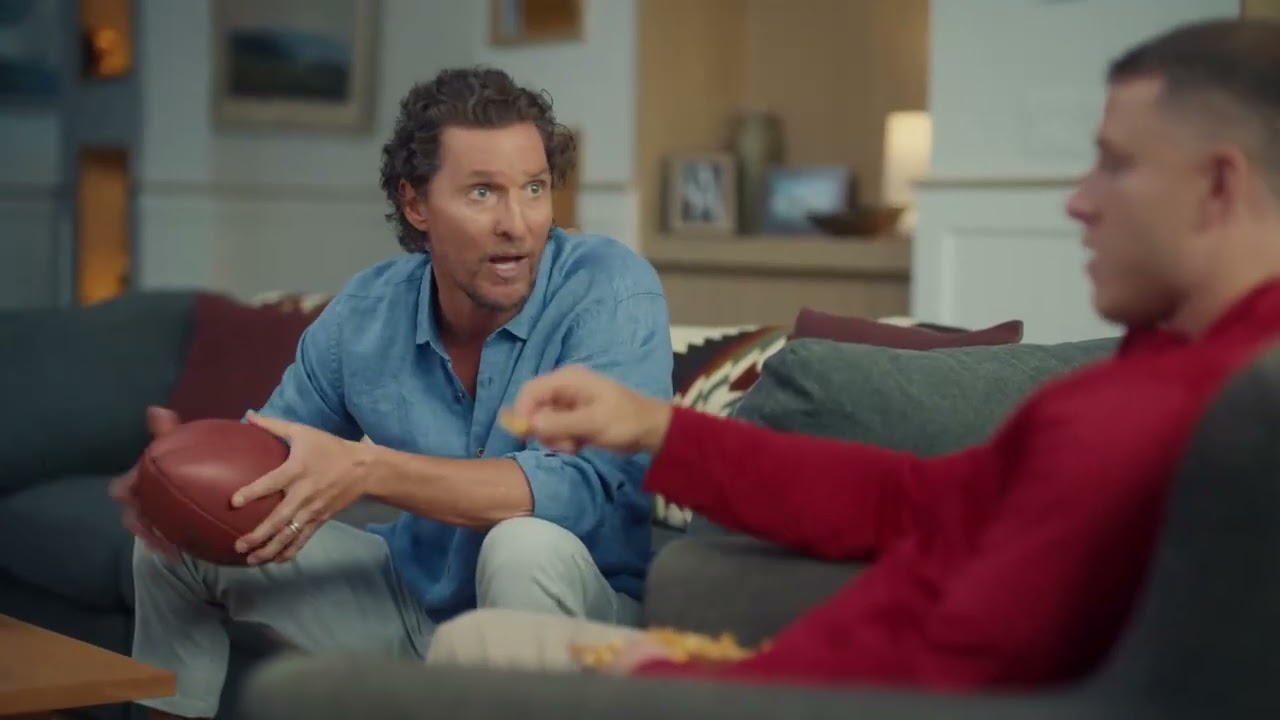
From the outset of the 2025 campaign, Matthew McConaughey was positioned as the anchor of Uber Eats’ latest major creative push. According to multiple reports, McConaughey leads the campaign with a main spot that plays on his everyman charisma and comedic timing, as he unpacks a tongue-in-cheek conspiracy about football being invented to sell food.
As the central character, McConaughey appears in multiple permutations of the ad—moving through different settings, wardrobe changes, voice‐overs and interactions—which supports the idea of “new cast” being both him plus his supporting stars. The creative decision to tie McConaughey’s familiar public persona (laid-back Texan, movie star) to the Uber Eats brand helps give the campaign a recognisable anchor.
The supporting celebrity ensemble: Stewart, Bacon, Charli XCX, Gerwig & Evans
While McConaughey plays the lead, the campaign is enriched by a strong cast of supporting celebrities — each bringing a distinct cultural cache. Among them:
Martha Stewart: The lifestyle icon appears in the ad, working alongside McConaughey in a kitchen-scene moment, riffing on food and football.
Charli XCX: The pop star shows up in the campaign, bringing a younger-skewing, music-savvy energy to the mix.
Kevin Bacon: The veteran actor makes a cameo in the 2025 spot, adding a further degree of star-power.
Greta Gerwig: The filmmaker appears in the campaign, further underscoring the up-market “big name” approach the brand is using.
Sean Evans: Best known as the face of the popular “Hot Ones” interview series, he appears in the spot in a food-centric cameo—playing to his persona of serious food critic-fan.
Together, this ensemble functions as the “new cast” — replacing simpler celebrity endorsements with a multi‐star cluster around McConaughey, aimed at giving the campaign breadth, cultural relevance, and cross-demographic appeal.
Uber | Who is the new cast of Uber Eats?
Uber | Who are the actors in the Uber One commercial?
Uber | Who Is the Actor in the New Uber Commercial?
Uber | Who Is the Guy in the New Uber Eats Commercial?
Global & regional variations: Javier Bardem (UK) and Andy Murray (Australia)
In addition to the U.S.-market headline cast, Uber Eats has rolled out region-specific campaigns with other major names in other territories:
Javier Bardem is featured in a U.K. campaign for Uber Eats titled “When You’ve Done Enough, Uber Eats.” In this spot, Bardem plays a parody of his usual villainous persona, letting himself relax with food delivery.
Andy Murray appears in the Australian campaign for Uber Eats, which centres on a comedic high-action spot where he is being “kidnapped” or chased by Uber Eats delivery couriers. The tagline “Get Almost, Almost Anything, Maybe Even Andy Murray” was used in the Australian market.
These regional variations show that while the “new cast” term may be used, it is not confined strictly to one region or one ad — Uber Eats is deploying different casts in different markets while retaining the broad strategy of big-name celebrity tie-ins.
What this casting strategy signals for the brand
The casting decisions made by Uber Eats in this campaign are quite deliberate, and they send several important signals:
Premium positioning: By enlisting A-list actors (McConaughey, Bardem) and cross-generational stars (Stewart, Bacon, Charli XCX), the brand is positioning itself as more than just a food-delivery service; it’s showing itself as a lifestyle and cultural brand.
Cross‐category relevance: The presence of food-centric figures like Sean Evans (who is known for eating wings on camera) and the references to football and cravings tie the service both to food and to broader entertainment/comfort behaviour.
Global adaptation: The fact that Uber Eats uses different cast members in different markets acknowledges the need for local relevance while preserving a global creative framework.
Cultural cache & conversation: Big names = media attention. With super-stars attached to the campaign, the brand ensures that the ads are talked about, shared, and analysed — increasing their value beyond simply being seen.
Narrative complexity: Instead of the brand sending a single SAT-style message (“Order food, get it fast”), the campaign uses narrative (football conspiracy) and star power to create curiosity and memorability. This helps overcome ad fatigue in a crowded marketplace.
What you should look for as a viewer/audience member
If you’re watching Uber Eats ads or tracking their campaign rollout, here are some key things to notice:
Recognise the lead-face (Matthew McConaughey in the U.S., Bardem in the U.K., Murray in Australia) and then see how supporting stars join or contrast him.
Observe how the food/delivery message is wrapped in a narrative rather than being the sole focal point — e.g., football conspiracy, relaxing villain, pursuit of Murray.
See how the tonal shifts differ by region: in the U.S. it’s comedic + star-heavy; in the U.K. it’s slightly more cinematic or tongue-in-cheek; in Australia it is action/comedy hybrid.
Pay attention to the “service” message: while the stars are prominent, the underlying message remains that Uber Eats can deliver anytime, almost anything, with a moment of ease or relief.
Notice the media rollout: teaser spots, social posts with stars, behind-the-scenes coverage all contribute to the “new cast” buzz, meaning the casting is part of the campaign’s news itself.
In summary: who comprises the ‘new cast’?
In summarising, the “new cast” of Uber Eats (2025) can be defined as follows:
Lead actor: Matthew McConaughey – U.S. campaign.
Supporting cast: Martha Stewart, Charli XCX, Kevin Bacon, Greta Gerwig, Sean Evans (in the U.S.).
Regional leads: Javier Bardem (U.K.), Andy Murray (Australia) among others in localised campaigns.
This represents a shift from previous, simpler celebrity endorsements to a layered, multi-star, globally-adapted campaign architecture. It’s not just “one celebrity” for a spot, but a full ensemble and a narrative context that is designed to drive conversation and recall.

Acting Magazine Newsletters
Never miss out on the best from Acting Magazine.