


Why Is It Called Hollywood?
(By Tonya Tannenbaum)

Hollywood is more than just a neighborhood in Los Angeles; it is a global symbol of cinema, fame, and entertainment. It is synonymous with the American film industry and has been the birthplace of countless cinematic masterpieces. But how did this iconic place get its name? The story of why it is called Hollywood is rooted in history, geography, and a touch of serendipity. This article will delve into the origins of the name “Hollywood,” the factors that led to its prominence, and the evolution of Hollywood from a quiet rural area to the heart of the global film industry.
Early History of Hollywood
Before Hollywood became synonymous with film, the area was known by a different name. Hollywood was initially part of a land area known as the Rancho La Brea, which had been part of a larger tract of land granted to the Brea family during the Spanish colonial period. The land was primarily used for agricultural purposes, and the area remained sparsely populated for many years.
The land that would later become Hollywood was originally acquired by H.J. Whitley, a wealthy businessman who played a major role in the development of the area. Whitley, often referred to as the “Father of Hollywood,” had a vision of transforming the land into a thriving community. However, it wasn’t until the arrival of a young couple from Ohio that the name “Hollywood” began to take shape.
The Origin of the Name “Hollywood”
The name “Hollywood” itself has a relatively straightforward origin, but the circumstances surrounding its adoption are somewhat whimsical and based on chance. The story begins with the arrival of a woman named Daeida Wilcox. In 1886, Daeida and her husband, Harvey Wilcox, moved from Kansas to Los Angeles. The couple had purchased a large tract of land in the area and began developing it into a residential community. However, Daeida was not completely satisfied with the land’s name and sought to find a more fitting name for the area.
Daeida had been inspired by a vacation she took to a place called Hollywood in Ohio, where she had visited a family friend. She was taken with the name and decided it would be an ideal name for the land she and her husband were developing. However, the exact origin of the name “Hollywood” is slightly unclear. Some sources suggest that Daeida had simply overheard the name being used by a couple she met on a train, while others state that it was based on a combination of the nearby “Hollywood Canyon” and a term for the area’s holly trees.
What is known for certain is that Daeida Wilcox was the one who pushed for the name to be adopted, and in 1887, it officially became the name of the new residential development. The name “Hollywood” was unique, catchy, and had a certain charm that made it stand out, even though it was initially intended to be just a suburban development.
Hollywood’s Beginnings as a Residential Community
The early years of Hollywood were focused on real estate development rather than the film industry. Hollywood was marketed as a residential community for wealthy individuals looking to settle in a peaceful, scenic environment. The Wilcoxes built a small but picturesque neighborhood that attracted residents, and in 1903, Hollywood was officially incorporated as a part of Los Angeles.
During its early years, Hollywood was primarily an agricultural area, with citrus groves and farmland dotting the landscape. The area’s mild climate and scenic surroundings made it an appealing place for people to build homes. In addition, Hollywood was close enough to Los Angeles to provide easy access to city life, yet far enough away to maintain a tranquil, rural atmosphere.
The real turning point for Hollywood, however, came with the rise of the film industry, which would transform the region from a quiet neighborhood to a global entertainment capital.
The Arrival of the Film Industry
In the early 1900s, Hollywood was an up-and-coming area, but it wasn’t yet associated with the film industry. The motion picture industry was still in its infancy, and filmmakers were searching for new locations to set up their studios. At the time, Los Angeles was already gaining a reputation as a center for the film industry due to its favorable weather, diverse landscapes, and proximity to both raw materials and skilled labor.
In 1911, the first film studio in Hollywood, the Nestor Film Company, opened its doors, marking the beginning of Hollywood’s relationship with the movie industry. The arrival of film studios in the area marked the first step in transforming Hollywood into the center of the film industry. However, it was not until the 1920s that Hollywood truly became the epicenter of cinema.
Hollywood’s Rise to Prominence
The 1920s were a decade of great change for Hollywood. The advent of the “Golden Age” of Hollywood coincided with the explosive growth of the film industry. Major film studios such as Universal Pictures, Paramount Pictures, Warner Bros., and Metro-Goldwyn-Mayer (MGM) established their headquarters in Hollywood, and the area quickly became home to many famous actors, directors, and producers.
As Hollywood’s reputation grew, so did its visibility in popular culture. The name “Hollywood” became synonymous with glamour, fame, and the world of cinema. The district’s movie palaces, including iconic theaters like the TCL Chinese Theatre and the El Capitan Theatre, began to draw attention from moviegoers and tourists alike.
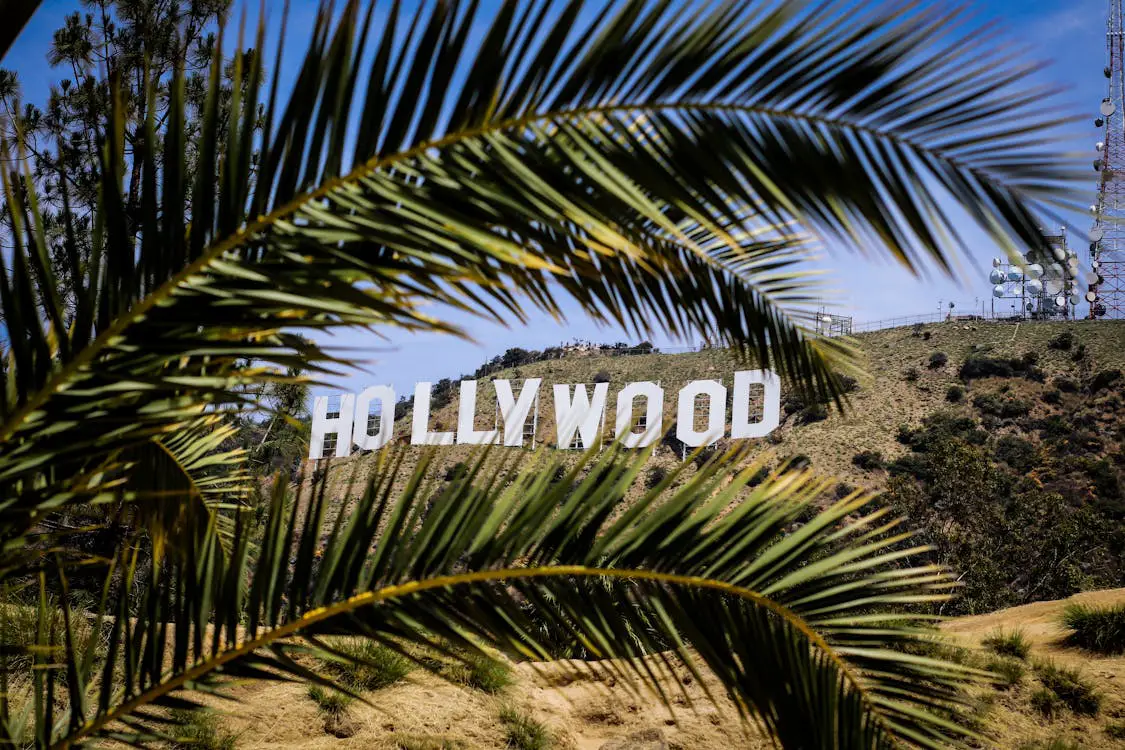
The first “Hollywood” sign was erected in 1923 and originally read “Hollywoodland,” a real estate advertisement for a new housing development in the hills above the city. The sign itself was intended to be a temporary marketing tool, but it quickly became an iconic symbol of the area. In 1949, the “land” portion of the sign was removed, and the Hollywood sign became the lasting symbol of the movie industry.
Hollywood and the Studio System
Hollywood’s dominance in the film industry can be attributed in large part to the studio system that emerged in the 1920s. Major Hollywood studios, often referred to as “The Big Five” (Paramount, Warner Bros., 20th Century Fox, Metro-Goldwyn-Mayer, and RKO), controlled almost every aspect of the production, distribution, and exhibition of films. These studios produced a vast number of films each year, employing thousands of actors, directors, writers, and technicians.
The studio system helped shape Hollywood’s identity as the center of global cinema. It was during this period that many of Hollywood’s most famous stars, including Marilyn Monroe, Humphrey Bogart, and Cary Grant, became household names. The stars and films of the studio system helped solidify Hollywood’s reputation as the place where dreams were made.
During the 1930s and 1940s, Hollywood was at the height of its power and influence, churning out films that were enjoyed by audiences around the world. Hollywood was no longer just a place—it was a brand. It symbolized wealth, power, and fame. Movies like Gone with the Wind (1939) and Casablanca (1942) helped cement Hollywood’s role as the global leader in entertainment.
The Decline of the Studio System and the Rise of New Hollywood
By the 1950s, the studio system began to unravel. The advent of television, the decline of the dominance of major studios, and changing tastes in filmmaking all contributed to a shift in Hollywood’s power structure. The rise of independent filmmakers in the 1960s and 1970s, a period known as the “New Hollywood,” saw a more diverse range of stories being told on screen, and filmmakers began to have more creative freedom.
Despite these changes, Hollywood continued to be the focal point of the film industry, with Los Angeles remaining home to many of the world’s most influential film studios and production companies. The term “Hollywood” continued to evolve, shifting from being merely a geographic location to a term synonymous with global entertainment and cinema.
Hollywood’s Cultural Influence
Today, Hollywood is not just the name of a neighborhood—it is a brand, a cultural institution, and a symbol of global entertainment. It represents not only the movie industry but also the larger media and entertainment sector, including television, music, and digital content. The term “Hollywood” is recognized around the world, evoking images of movie stars, red carpets, and the glamour of the entertainment industry.
Hollywood has expanded its reach beyond film production, with numerous international film festivals, media events, and entertainment conventions held in the city each year. Moreover, with the rise of digital platforms and streaming services, Hollywood has become a central hub for new media and digital content creators.
Conclusion
Hollywood’s name, rooted in the vision of Daeida Wilcox and her connection to a vacation in Ohio, has become one of the most famous and recognizable terms in the world. From its humble beginnings as a quiet residential community to its transformation into the heart of the global film industry, Hollywood has had a lasting impact on popular culture. Its name is no longer just a geographical location; it is a symbol of entertainment, fame, and the magic of cinema.

Acting Magazine Newsletters
Never miss out on the best from Acting Magazine.