


What is the Start of a Play Called?
An Exploration of Theatrical Beginnings, Structure, and Storytelling
(By Carmichael Phillip)
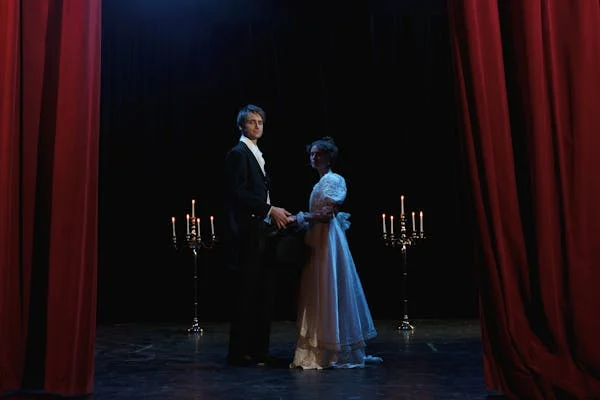
(Photo: Cottonbro Studio | Pexels)
Introduction: The Importance of a Play’s Beginning
Every great performance begins somewhere, and in the world of theater, the opening moments are crucial. Whether it’s the hush that falls over the audience as the lights dim, or the first dramatic line that captures attention, the start of a play sets the tone for everything that follows.
But what is the start of a play actually called?
In theatrical terms, the beginning of a play is most commonly referred to as the prologue or opening scene, though it can also include other elements like the exposition, curtain-raiser, or prelude depending on the play’s structure and genre. In this article, we’ll explore these terms in depth, provide historical and modern examples, and break down the function and artistry behind how a play begins.
Prologue: Setting the Stage Before the Action Begins
The prologue is one of the oldest and most classic components of a play’s beginning, dating back to ancient Greek and Roman drama. It serves as an introduction to the story, usually delivered by a character (or chorus) who directly addresses the audience.
One of the most famous prologues in theater comes from William Shakespeare’s Romeo and Juliet:
“Two households, both alike in dignity,
In fair Verona, where we lay our scene…”
Here, the prologue not only sets the scene but also reveals the tragic outcome. Shakespeare uses the prologue to prepare the audience emotionally and intellectually for the unfolding drama.
In modern plays, prologues are less common, but they still appear. For example, Angels in America by Tony Kushner begins with a rabbi delivering a eulogy, which functions as a kind of prologue—setting thematic expectations for the audience.
Opening Scene: Immersing the Audience Immediately
The opening scene is typically the first fully staged moment of the play and may come with or without a prologue. This is where the audience meets the characters, setting, and situation for the first time. A strong opening scene grabs attention, builds curiosity, and establishes the tone of the performance.
For instance, in Arthur Miller’s Death of a Salesman, the play opens with Willy Loman returning home unexpectedly. The dialogue is mundane on the surface but rich with subtext, immediately immersing the audience in a tense family dynamic.
Another powerful example is found in August Wilson’s Fences, which begins with the characters of Troy and Bono engaging in casual conversation about work and life. The dialogue quickly draws the audience into the world of 1950s Pittsburgh, setting the tone for the social and emotional themes of the play.
Exposition: The Information You Need to Know
Often overlapping with the prologue and opening scene, the exposition is the portion of a play where key background information is revealed. It helps the audience understand the characters’ relationships, past events, and the stakes of the story.
Exposition can be delivered through dialogue, monologue, or even through visual elements on stage. In Tennessee Williams’ The Glass Menagerie, the character of Tom narrates the story, acting as a bridge between the audience and the action. His opening monologue provides vital exposition:
“Yes, I have tricks in my pocket, I have things up my sleeve. But I am the opposite of a stage magician.”
This self-aware narration not only introduces the audience to the story but also to the unique memory-play structure.
Curtain-Raiser: A Pre-Show Introduction
In some productions, especially during earlier centuries or in variety shows, a curtain-raiser was a short play or scene performed before the main event. This wasn’t necessarily connected to the primary story but served to warm up the audience.
For example, in the 19th century, it was common for theaters to present a brief comedic sketch or musical number before a more serious drama. Though this practice is less common today, it laid the groundwork for techniques like pre-shows, preambles, and overtures that still exist in different forms.
In contemporary productions, some experimental plays might still use a form of a curtain-raiser—perhaps as a multimedia installation or audience-interaction moment—to transition the audience into the world of the play.
Prelude and Overture: Musical and Atmospheric Openings
Especially in musicals or opera, the play may begin with a prelude or overture—a musical introduction that previews themes, melodies, or emotions the audience will encounter.
Take Stephen Sondheim’s Into the Woods. The musical begins with an overture that transitions seamlessly into the opening number. In doing so, it introduces characters and tone before the first lines are spoken.
Similarly, in Les Misérables, the overture and first musical sequence (“Look Down”) introduce Jean Valjean’s story and the world of 19th-century France. These musical elements help immerse the audience in the narrative world while delivering exposition through melody and lyric.
The Inciting Incident: The Spark That Ignites the Plot
While not the start of a play in terms of sequence, the inciting incident is often found within the early scenes. It’s the event that sets the story in motion and gives the protagonist a problem to solve or a goal to pursue.
For instance, in Sophocles’ Oedipus Rex, the inciting incident occurs when Oedipus vows to find the source of the city’s plague, setting off the investigation that leads to his tragic self-discovery.
In Lorraine Hansberry’s A Raisin in the Sun, the inciting incident is the arrival of the insurance check. This moment fuels the drama surrounding money, dreams, and family tension.
Recognizing the inciting incident is key to understanding how the rest of the play will unfold. It represents the hinge point between setup and action.
Examples from Modern Theater and Film Adaptations
Contemporary plays and adaptations continue to experiment with how they begin. Consider Harry Potter and the Cursed Child, which opens with a condensed, fast-paced retelling of the last scene from the Harry Potter books. This allows fans to reorient themselves quickly, while introducing the new generation of characters.
In Hamilton by Lin-Manuel Miranda, the entire first number is effectively a stylized prologue. The cast outlines Alexander Hamilton’s backstory and establishes the stakes of his rise in American history—all through rap and song:
“How does a bastard, orphan, son of a whore and a Scotsman…”
This musical technique functions as a modern version of the classic prologue, blending exposition and spectacle in a way that is fresh and unforgettable.
The Role of Lighting, Sound, and Visuals in a Play’s Beginning
While much focus is placed on text and dialogue, technical elements play an equally important role in starting a play. The lighting cue that dims the house lights signals to the audience that the story is beginning. Music can set emotional expectations. Set design might hint at the play’s genre—minimalist, realistic, surreal, etc.
Take The Curious Incident of the Dog in the Night-Time, which opens with a visually arresting light and sound display that places the audience inside the mind of the autistic protagonist. The play doesn’t rely on a traditional prologue; instead, it uses stagecraft to immerse viewers in a unique perspective.
Children’s Theater and Educational Plays: Clear Introductions
In educational or children’s theater, the start of the play often involves a clear, direct introduction—sometimes even by a narrator or host character who speaks to the audience. This helps young viewers understand what’s happening and what to expect.
For example, in Charlotte’s Web, the opening scene is Fern saving Wilbur. It’s straightforward, emotional, and sets up the central relationship right away.
These types of openings are especially valuable in plays designed for school tours or community performances, where clarity and accessibility are paramount.
Conclusion: The Start of a Play Is More Than Just a Scene
So, what do you call the start of a play? It could be a prologue, opening scene, exposition, prelude, curtain-raiser, or even simply the first moment of action. Each term reflects a slightly different purpose, but all point to the vital role that a play’s beginning plays in engaging its audience.
Whether the curtain rises on a monologue, a dramatic confrontation, or a soft musical theme, the beginning of a play invites us into a world. It establishes the rules, introduces the characters, and offers the first taste of the journey to come.
And like any great story, a strong beginning can make all the difference—transforming a simple performance into a powerful theatrical experience that stays with us long after the final bow.

Acting Magazine Newsletters
Never miss out on the best from Acting Magazine.