


7 Ways to Do a Self-Tape Without a Reader
For auditions that require more than one person, there are several options available when you don’t have a reliable reader
(By Jim Webb)
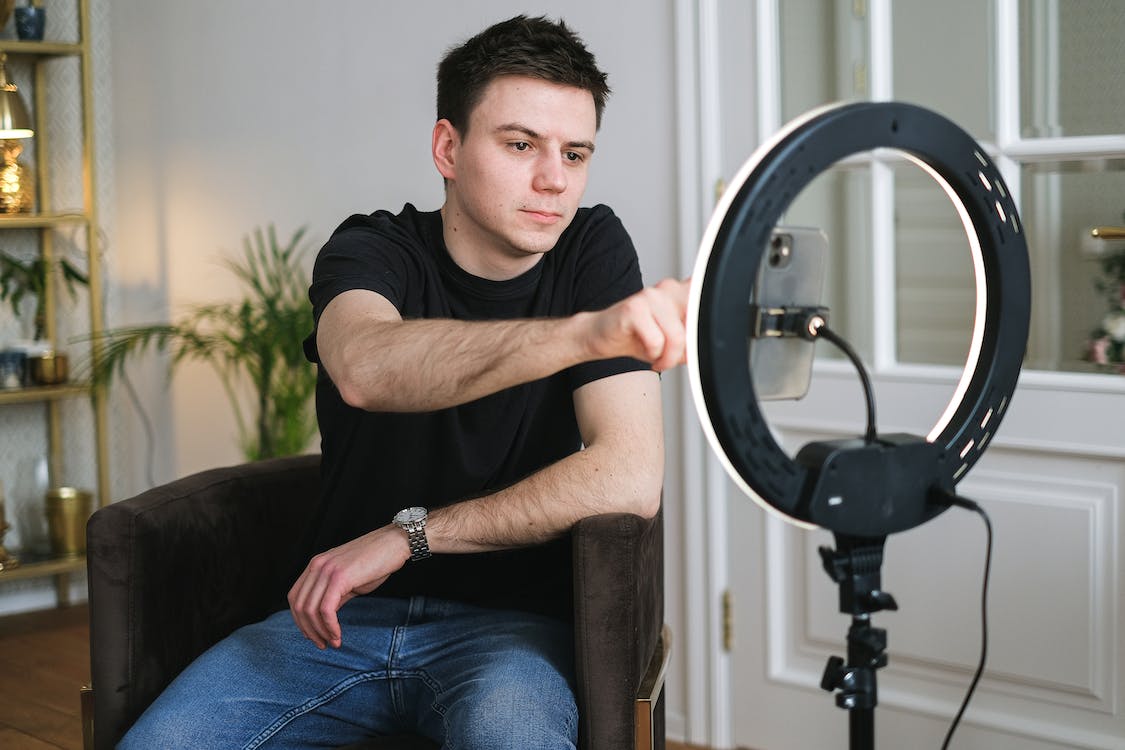 (Photo: Anna Shvets | Pexels)
RELATED TOPICS:
7 Self-Tape Instructions Actors Often Ignore
Ok, here’s the good news: self-tape auditions come with lots of benefits. You can work on your own schedule. You can control the process. You can do unlimited takes. You never have to fight through rush-hour traffic.
Here’s the bad news: you have to procure your own equipment. You have to worry about things like lighting and sound. You have to have space in your home (sometimes a tiny apartment) to do it.
Here’s the absolute worst news: you might need a reader – but you can’t always find a reader.
But don’t lose hope, actors! For auditions that require two people, there are options available to you, even without having a reliable reader.
Here are a few:
#1: A Self-Tape Service

(Photo: Erik McLean | Unsplash)
There might be a self-tape service near you. There are companies out there that specialize in helping actors create amazing self-tapes. Along with taking care of the technical aspects, like camera, sound and lighting, they can also offer you a reader.
#2: Turn to the Apps
There’s a phone app for darn near everything these days!
Need a reader? There’s an app for that!
There are apps and platforms out there that connect actors to other actors who need assistance. You can use one of those apps to find your reader.
#3: The Imaginary Reader
It might feel a little weird to do, but you can simply pretend you have a reader. That is, you can pause after you say your lines, then imagine a reader is speaking the other character’s lines.
You can make facial expressions and react, as you say the lines of the other character in your head. Then you speak out loud when it’s your character’s turn to speak.
#4: Be Your Own Reader
 (Photo: Anna Shvets | Pexels)
Some actors have had success recording the lines of the other characters. They, in a sense, become their own readers.
They play back a recording of their own voices saying the lines and then respond of them. Tricky, but it can be done!
#5: Turn Dialogues into Monologues
You could just simply pretend that the dialogue is a monologue. You could blend the script together, take a few liberties with the lines, and turn the dialogue into a monologue. This can’t be done in all cases. But it can be done in some cases.
For example, your character might have a ton of lines. The other character only has a line here and there. So, you skip over the other character’s lines, add a line to make it make sense, and create one monologue.
#6: Join a Group!
There are groups of actors who have each other’s backs at times like this. You can form a group with the actors in your acting class. You can join groups of actors who meet up to work on projects together.
You can also check to see if there’s a Facebook group in your area you can connect with.
#7: Do only the most important lines
 (Photo: Mart Productions | Pexels)
Finally, you can distill the sides!
A script (or sides) is not created equally. You can tell where the most important moment of the scene is. You can figure out the dialogue that the casting director most wants to see from you.
So, in a worst-case scenario, just record those lines and only those lines. Ignore the rest of the lines, including the lines of the other characters, altogether! Show casting how good you can be with the most important part of the script. Blow them away with it! Let them salivate, as they imagine the rest of what would have been your self-tape if you, indeed, had a reader.
Will these suggestions work in all situations? No! Of course not.
Come on, people! We’re improvising here! We’re trying to make do with what we have, right?
So, it’s not going to be perfect. It’s not going to work in all cases.
But using one of these suggestions gives you a chance to turn in a decent self-tape, without having a reliable reader.
Preparing Your Material the Right Way — Related Articles
How to Prepare for Your First Audition
Do You Have to Memorize a Monologue for an Audition?
What Is a Self-Tape Audition?
How Long Should a Self-Tape Audition Be?
7 Ways to Do a Self-Tape Without a Reader
How to Submit to a Casting Director
How to Get Cast in Commercials
The Complete Guide to Acting Auditions (The 2026 Edition)
The Perfect Self-Tape Audition Reader – Learn what makes a strong reader and how pacing, volume, positioning and acting ability can help rather than hurt your self-tape performance.
What Is an Audition Reader? – Explore the role of the off-camera reader who supplies the other character’s lines and gives the auditioning actor someone to react to.
How to Find Readers for Self-Tapes – Discover practical ways to find reliable readers through acting classes, friends, fellow performers and online actor communities.
Is It Okay to Do a Self-Tape Without a Reader? – Learn when a reader is preferred and what alternatives actors can use when nobody is available to read the other character’s lines.
How to Do a Self-Tape on Your Own – Follow a step-by-step guide to filming a professional audition alone, including options for handling dialogue without an in-person scene partner.
Can You Do a Self-Tape Alone? – Explore how actors can handle equipment, multiple takes, slates and performance choices when recording an audition without assistance.
The Ultimate Guide to Self-Tapes – This comprehensive resource covers self-tape equipment, readers, framing, eyelines, slating, backgrounds, submission and other essential audition topics.
How to Make a Self-Tape – Learn how to prepare your space, position your camera, rehearse with a reader, record your performance and submit a polished audition.
10 Tips for Making the Perfect Self-Tape – Discover practical recommendations covering scripts, framing, lighting, audio, wardrobe, rehearsing and selecting your strongest take.
The Self-Tape Checklist – Use this detailed checklist to review your slate, eyeline, reader position, framing, camera angle, background, sound and submission requirements.
Where Do You Look When Self-Taping? – Learn how to establish a natural eyeline toward your reader while keeping your eyes close enough to the camera for casting directors to see your performance clearly.
Do You Look at the Camera During a Self-Tape? – Discover when actors should look toward an off-camera reader and the situations in which direct-to-camera eye contact is appropriate.
What Do I Say Before I Begin My Self-Tape? – Learn what information casting directors may request in a self-tape slate before the actor begins performing the audition scene.
What Color Background Is Best for Self-Tape Auditions? – Explore why neutral, distraction-free backgrounds can keep casting professionals focused on the actor and the performance.
What Is the Best Background Color for Self-Tape Auditions? – Learn how gray, blue, beige and other neutral backgrounds can create a clean and professional self-tape presentation.
Should I Film My Self-Tape Vertically or Horizontally? – Discover why horizontal recording is generally the industry standard unless the casting instructions specifically request another format.
How Long Should a Self-Tape Audition Be? – Learn how project type, role size and casting instructions determine the ideal length of a self-taped audition.
How Long Is Too Long for Self-Tapes? – Explore why concise self-tapes usually work best and how actors can show emotional range without unnecessarily extending their auditions.
How Long Is Too Long for a Self-Tape? – Learn why actors should respect casting time limits and focus on delivering a strong, efficient audition rather than adding unnecessary material.
How Long Does It Take to Make a Self-Tape? – Explore the time involved in preparation, memorization, working with a reader, recording takes, editing and submitting an audition.
7 Self-Tape Instructions Actors Often Ignore – Learn why actors should carefully follow casting directions involving slates, tape length, takes, deadlines, labeling and submission procedures.
10 Tips for Submitting Your Self-Tape Audition – Discover best practices for naming files, reviewing your performance, meeting deadlines and sending your finished audition correctly.
Perfect or Not, Always Submit Your Self-Tape! – Learn why actors should avoid obsessing over perfection and make sure completed auditions actually reach casting before the deadline.
Do Casting Directors Even See Our Self-Tapes? – Explore an actor’s perspective on whether submitted self-tapes are always viewed and the uncertainty that can accompany remote auditions.
Actor Story: A Casting Director Hunted Me Down for a Self-Tape – Read one actor’s experience with a missed self-tape submission and why professionalism and communication matter during the audition process.
Casting Directors Should Give Us Feedback on Our Self-Tapes! – Explore the time and effort actors invest in readers, lighting, sound, slates, multiple takes and editing when producing remote auditions.
Do You Have to Memorize a Monologue for an Audition? – Learn when actors should be fully off-book and when cold readings or other audition situations may allow them to work from the script.
How Do I Audition for a Short Film? – Explore self-tape preparation for short-film casting, including backgrounds, lighting, framing and having a reader deliver the other character’s lines off-camera.
How to Get Cast in Commercials – Learn how actors can improve commercial auditions through strong self-tapes, professional slates, authentic performances and careful attention to casting directions.
The Complete Guide to Acting Auditions (The 2026 Edition) – This comprehensive audition guide covers self-tapes, readers, eyelines, framing, preparation, callbacks and many other aspects of modern casting.

Acting Magazine Newsletters
Never miss out on the best from Acting Magazine.