


What are some interesting facts about Stanislavski?
Exploring the Life, Legacy, and Revolutionary Techniques of the Father of Modern Acting
(By Carmichael Phillip)
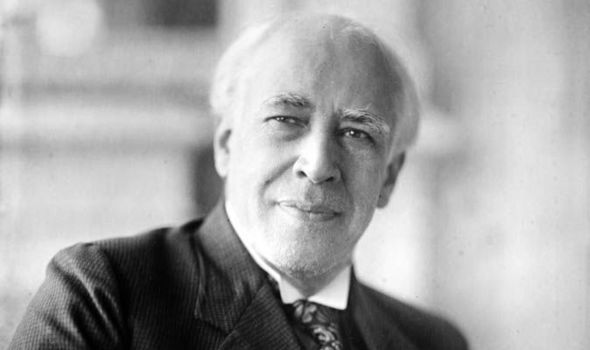 (Konstantin Stanislavski)
1. Stanislavski’s Real Name Was Konstantin Sergeyevich Alekseyev
Many people know him simply as Konstantin Stanislavski, but that was actually his stage name. He was born Konstantin Sergeyevich Alekseyev in Moscow, Russia, in 1863. The name “Stanislavski” was adopted later when he began acting and directing in the theater. Coming from a wealthy family that disapproved of his theatrical ambitions, he used this pseudonym to separate his artistic identity from his family’s high social standing.
The Alekseyev family was well-established, owning one of the largest manufacturing businesses in Moscow. Despite this privileged background, young Konstantin was fascinated by the world of performance, makeup, and storytelling—a fascination that would later transform modern acting forever.
2. He Revolutionized Acting with the “Stanislavski System”
Before Stanislavski, acting in Europe was often exaggerated and theatrical, emphasizing grand gestures and artificial delivery. Stanislavski changed everything. He believed that acting should be truthful, believable, and rooted in psychological realism.
His method, known as the Stanislavski System, introduced revolutionary concepts like:
Emotional Memory – Using one’s past experiences to evoke genuine emotion on stage.
The Magic If – Asking, “What would I do if I were in this situation?” to find authentic reactions.
Given Circumstances – Understanding the background, setting, and context of a character’s situation.
Objectives and Super-Objectives – Identifying what the character wants and how it drives their actions.
These principles helped actors connect deeply with their roles and deliver performances that felt real rather than performed.
3. He Co-Founded the Moscow Art Theatre
In 1898, Stanislavski joined forces with Vladimir Nemirovich-Danchenko, a playwright and director, to found the Moscow Art Theatre (MAT). Their goal was to create a theater dedicated to high artistic standards and truthful performances.
The MAT became one of the most influential theaters in the world, staging productions of Anton Chekhov’s plays, including The Seagull, Uncle Vanya, Three Sisters, and The Cherry Orchard.
These productions were groundbreaking. Instead of melodramatic delivery, Stanislavski emphasized subtlety, ensemble work, and emotional truth. The collaboration between Chekhov and Stanislavski forever changed how plays were performed and perceived.
4. Chekhov and Stanislavski Had Creative Tensions
Although they worked together on many masterpieces, Anton Chekhov and Stanislavski often disagreed on how those plays should be performed.
Chekhov saw his plays as comedies about everyday life, while Stanislavski often directed them as tragic, emotional dramas. For instance, Chekhov was surprised at how somber The Seagull appeared under Stanislavski’s direction.
Despite these creative differences, their partnership was deeply influential. The emotional realism that Stanislavski brought to Chekhov’s writing became a cornerstone of modern theater and acting education around the world.
5. His Teachings Inspired the American “Method” Acting Movement
Stanislavski’s influence crossed the ocean to Hollywood and Broadway. In the 1930s and 1940s, American acting teachers such as Lee Strasberg, Stella Adler, and Sanford Meisner adapted his ideas into what became known as Method Acting.
This approach encouraged actors to live truthfully in imaginary circumstances, fully immersing themselves in their roles. Some of the greatest actors of all time—Marlon Brando, Al Pacino, Robert De Niro, and Daniel Day-Lewis—were deeply influenced by Stanislavski’s principles.
Though the American Method evolved from Stanislavski’s original teachings, his core message remained: authenticity in performance.
6. He Believed in the Power of Ensemble Acting
Stanislavski rejected the idea of the “star actor” dominating a play. He believed that a performance should be a collaborative effort, where every actor contributes equally to the story.
At the Moscow Art Theatre, he trained his actors to listen, react, and respond to each other in real time, creating a natural flow of conversation and energy on stage. This emphasis on ensemble performance encouraged unity and harmony within the cast.
Modern directors and actors still apply these principles, ensuring that no character exists in isolation but instead thrives within the collective emotional landscape of the story.
7. He Was Also a Talented Actor and Director
Though best known for his theories, Stanislavski was a gifted actor and director in his own right. Early in his career, he performed in classical Russian and European plays, including works by Shakespeare and Gogol.
As a director, his productions were known for their meticulous attention to detail. He demanded authenticity in everything—from props and costumes to emotional delivery. For Stanislavski, every small element of a performance contributed to the whole truth of the play.
He also introduced table work, where actors would analyze scripts in-depth before rehearsing scenes—a process that remains a vital part of theater training today.
8. His Later Years Focused on Physical Actions
In his later years, Stanislavski began to move away from emotional memory, developing a concept known as the “Method of Physical Actions.”
He realized that emotions could be triggered through purposeful physical movements rather than through memory alone. For example, if an actor needed to appear sad, performing physical actions associated with sadness (like sitting still or looking down) could naturally evoke genuine feelings.
This discovery added balance to his system and ensured that actors could achieve authenticity even without relying solely on past experiences.
9. He Was a Lifelong Learner and Innovator
Stanislavski’s career spanned decades, and he never stopped refining his ideas. He kept detailed notebooks about his experiments in acting and directing, constantly questioning what made performances feel authentic.
His intellectual curiosity and openness to change made him a true pioneer. Even late in life, he was conducting workshops, mentoring younger artists, and exploring how psychology and behavior influenced performance.
He once said, “The greatest wisdom is to realize one’s own ignorance.” This humility kept him pushing the boundaries of art until his death in 1938.
10. His Books Are Still Essential Reading for Actors
Stanislavski wrote several influential books that remain cornerstones of acting education worldwide. The most famous include:
An Actor Prepares (1936)
Building a Character (1949)
Creating a Role (1957)
These books were based on his lifelong research and provide step-by-step methods for understanding and building a character from the inside out.
Even today, students at acting schools like The Actors Studio, RADA, and Juilliard study Stanislavski’s work to understand the craft’s psychological and emotional depth.
11. His Legacy Lives On in Every Modern Performance
Whether on stage or in film, Stanislavski’s influence can be seen in nearly every serious acting performance. His insistence on truth, honesty, and inner motivation set the standard for generations of artists.
Actors today continue to explore his techniques, using them to shape believable, emotionally powerful characters. The Stanislavski System remains the foundation of modern acting, and his legacy endures through every performer who strives to bring authenticity to their art.
As Stanislavski himself famously said:
“Remember: there are no small parts, only small actors.”
In summary, Konstantin Stanislavski wasn’t just a theater practitioner—he was a visionary who changed how we understand acting. His ideas bridged the gap between performance and psychology, between the external world and the actor’s inner life.
His system continues to inspire, evolve, and challenge artists everywhere—proving that, even more than a century later, Stanislavski’s passion for truth in performance remains timeless.

Acting Magazine Newsletters
Never miss out on the best from Acting Magazine.