


When did movies stop saying “The End?”
The rise and fall of a cinematic tradition that once marked the close of every story
(By Jim Webb)
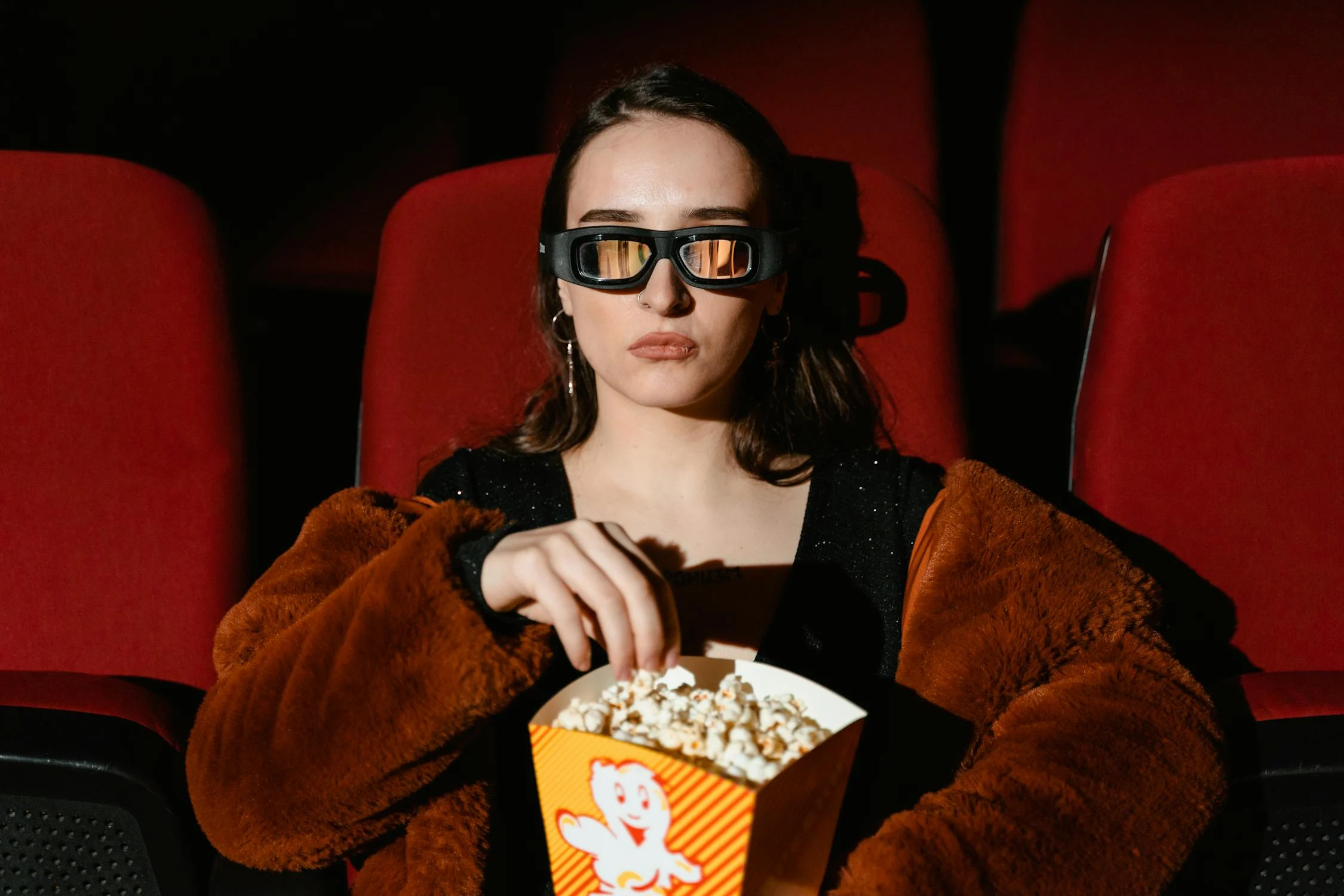 (Photo: Tima Miroshnickenko | Pexels)
A Brief History of “The End” in Film
In the early decades of cinema, from the silent film era through the mid-20th century, ending a movie with the words “The End” was practically a given. This tradition emerged from necessity and clarity—viewers needed an unmistakable cue that the story was over.
One of the earliest known uses appears in silent films from the 1910s and 1920s. D.W. Griffith’s The Birth of a Nation (1915) and Intolerance (1916) both famously end with clear title cards that read “The End.” These placards were critical in a time when intertitles carried the burden of dialogue and direction. Even as talkies emerged in the late 1920s and early ’30s, the tradition persisted.
As technology and storytelling advanced, filmmakers kept the phrase as a stylistic signature. From Disney classics like Snow White and the Seven Dwarfs (1937) to Gone with the Wind (1939)—which famously ended with the majestic scroll of “The End”—audiences came to expect the phrase as part of the viewing experience.
Why Did “The End” Start to Disappear?
By the 1970s, “The End” was quietly vanishing from Hollywood. It wasn’t an abrupt decision, but rather a gradual phasing out driven by evolving trends in narrative structure, film style, and technology.
One key reason was the rise of the rolling credits. In earlier decades, the majority of film credits appeared at the start. By the 1960s and ’70s, this reversed, and end credits became more comprehensive. As audiences grew used to watching names roll up the screen, there was less need for a hard stop phrase like “The End.”
Director Steven Spielberg, whose early work marked this turning point, noted in a 1982 interview:
“Once the audience sees the credits start, they know it’s over. You don’t need to say it outright anymore.”
Moreover, the rise of cinematic ambiguity and open-ended storytelling made the definitive “The End” feel too final for some genres. Films like 2001: A Space Odyssey (1968) and Five Easy Pieces (1970) end without resolution, and thus a concluding statement might feel jarring or inappropriate.
The Influence of New Hollywood and Auteur Filmmaking
The late 1960s to early ’80s saw the rise of New Hollywood—a movement characterized by experimentation, realism, and breaking traditional narrative structures. Directors like Francis Ford Coppola, Martin Scorsese, and Stanley Kubrick were less interested in tidy conclusions.
Take The Godfather (1972). The film ends on a chilling, powerful image: Michael’s transformation into Don Corleone is cemented as the door closes. No “The End.” No explanation. Just silence and implication.
As film historian Leonard Maltin explains, “Audiences became more sophisticated. They no longer needed a signpost to tell them when to feel closure.”
In essence, “The End” began to feel like a relic of a more innocent, guided cinematic era.
Genres That Held On Longer
While most mainstream films moved on, some genres held fast to the tradition longer than others.
Westerns, for instance, often retained “The End” well into the ’70s, perhaps because of their connection to classical narrative forms. John Wayne’s The Shootist (1976), for example, ends with a traditional flair that includes a simple yet poignant “The End.”
Similarly, children’s animation preserved the phrase longer, particularly in Disney and Warner Bros. productions. It provided young viewers with clear narrative closure. The Rescuers (1977) and The Fox and the Hound (1981) still displayed “The End” as a comforting sendoff.
Even some foreign films, especially from Japan and France, continued the practice into the 1980s. Studio Ghibli’s Nausicaä of the Valley of the Wind (1984) includes a soft, whimsical “The End” in its original Japanese release.
Television’s Role in Shaping Modern Endings
Television may have helped accelerate the demise of “The End” in movies. TV shows rarely used the phrase, instead opting for fade-outs, cliffhangers, or end-credit music cues. As audiences got used to that format, films started to reflect the same language.
By the 1980s and ‘90s, blockbuster hits like Jurassic Park, Titanic, and Forrest Gump closed with rolling credits and sweeping scores, leaving no room or need for that old-fashioned full stop.
As Quentin Tarantino once remarked, “Modern audiences know the rhythm of a movie ending. If they need words to tell them it’s over, the movie probably didn’t do its job.”
Modern Homages and Nostalgic Callbacks
Interestingly, the phrase hasn’t vanished entirely. Some modern filmmakers use it intentionally as a nostalgic callback or stylistic nod.
Tim Burton, a master of blending retro aesthetics with modern sensibilities, ended Ed Wood (1994) with a black-and-white “The End” card, matching the film’s vintage tone. Similarly, The Artist (2011), a silent film homage, appropriately ends with a bold “The End.”
Wes Anderson’s The Grand Budapest Hotel (2014) doesn’t literally say “The End,” but its meticulous framing and storybook quality almost imply it. Anderson himself once said:
“I try to make the end of my films feel like the last page of a fairy tale. Sometimes that means using classic cues, even if they’re just visual.”
These homages demonstrate how “The End” has shifted from standard practice to a stylized choice—a wink to cinema’s past.
A Sign of the Times: Audience Expectations Evolve
Contemporary audiences expect something else at the end of a movie: bonus scenes, post-credit reveals, and shared universe teasers. Marvel Studios practically pioneered this expectation with Iron Man (2008), which ends not with “The End” but with Samuel L. Jackson stepping out of the shadows to launch the Avengers Initiative.
Adding “The End” before such scenes might seem redundant or even misleading. In fact, studios now anticipate that audiences will stay seated. It’s no longer about saying goodbye but about teasing what’s next.
“There’s no ‘end’ in franchise filmmaking,” joked James Gunn, director of Guardians of the Galaxy. “It’s more like… ‘To be continued… forever.’”
Will “The End” Ever Come Back?
Could we see a resurgence? Possibly, but only as a deliberate retro flourish. Much like film grain or 4:3 aspect ratios, “The End” might serve as a stylized choice for filmmakers seeking a throwback vibe.
For example, in 2023, Christopher Nolan ended Oppenheimer with a visually resonant final moment but opted not to use “The End,” even though the film has a classic epic structure. Had he used it, it would have felt like a deliberate period-piece flourish, not a necessity.
Filmmakers might reclaim it for special projects, particularly in anthology films, homages, or genre revivals.
Conclusion: The End of “The End” Wasn’t the End
So, when did movies stop saying “The End”? There’s no single year, but the trend faded throughout the 1970s and disappeared from most mainstream films by the 1990s. The shift was driven by changing technology, storytelling preferences, and evolving audience expectations.
Today, “The End” lives on as a symbol, not a necessity—an artifact of a time when cinema needed to guide its audience more clearly. It’s a phrase we may see again, not because we need it, but because we want to remember when we did.
The End.

Acting Magazine Newsletters
Never miss out on the best from Acting Magazine.