


How Do Actors Stay So Still in Death Scenes?
(By Jim Webb)
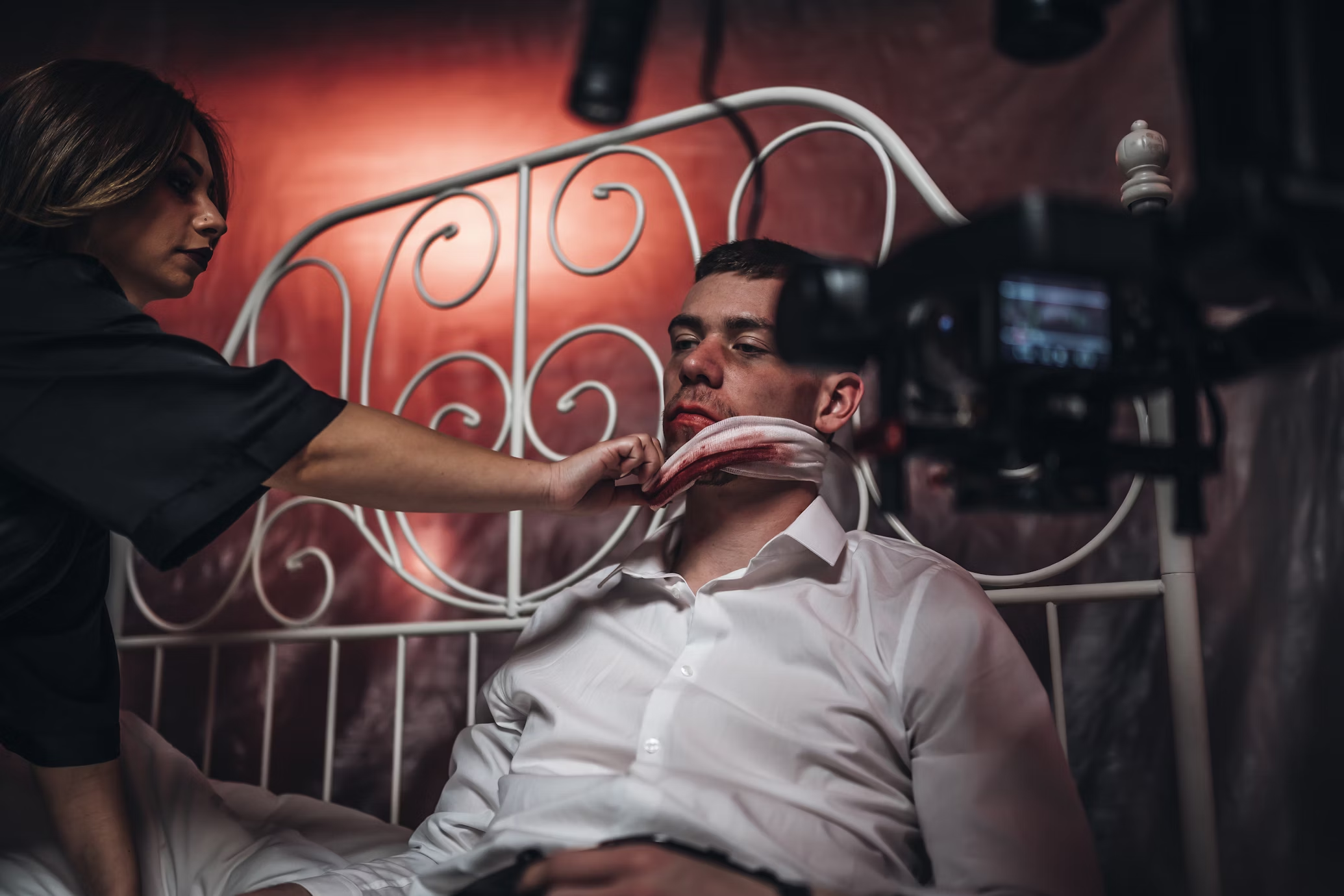 (Photo: Rene Ranisch | Pexels)
Death scenes in movies and TV shows are often among the most intense and memorable moments for both actors and audiences. While an actor’s performance in a death scene may be full of emotional intensity, the physical act of “dying” on screen is a unique challenge in itself. It’s one thing to convey the inner turmoil of a character about to meet their end, but it’s another to remain completely still for extended periods. Whether a character is shot, stabbed, or struck by some tragic fate, the actor’s stillness is often integral to making the scene both believable and impactful. So, how do actors manage to stay so still during these tense moments? It’s a combination of preparation, technique, and sometimes even a bit of deception.
This article explores how actors manage to stay motionless during death scenes, touching on the physical, psychological, and practical methods involved, along with notable examples from iconic death scenes in film and television.
The Physical Demands of Remaining Still
At first glance, it seems like simply lying motionless for a death scene would be a relatively easy task for an actor. However, remaining still for any significant amount of time requires both mental and physical discipline. The body, by nature, wants to move: to breathe, twitch, adjust, or even fidget. Yet, for a death scene, every tiny movement must be eliminated to ensure that the scene looks authentic and impactful.
1. Controlling Breathing
Breathing is one of the most noticeable signs of life. In death scenes, it’s crucial for actors to control their breathing so that they don’t inadvertently reveal the character’s life force. In most death scenes, actors are instructed to either hold their breath or breathe as subtly as possible. This technique helps make the actor’s death seem more convincing and less like a staged performance.
Some actors can hold their breath for extended periods to give the impression of a character being dead. However, this can be difficult to achieve for long stretches of time, so actors may rely on smaller, less noticeable breathing patterns. They might breathe very lightly or synchronize their breath with specific moments in the scene, such as the rise and fall of a chest or a slight tremor after a fatal injury.
2. Physical Relaxation
Actors must also actively relax their muscles in order to remain still. This can be quite challenging, especially when the body is under stress from external factors such as uncomfortable positions, the desire to blink, or even the body’s natural response to adrenaline. Staying still requires a level of calmness, similar to meditation or yoga, where the actor must consciously release tension from each muscle group.
For instance, if an actor is playing a character who has been shot in the chest and is lying on the floor, they need to stay perfectly still and avoid the involuntary reflex to tense their abdominal muscles or arms. The muscles must remain relaxed and inactive to ensure that no movement is visible to the camera. This might involve intense concentration, particularly when actors have to hold a position for an extended period.
3. Making the Actor Comfortable
While staying still is important, comfort is essential to making the performance more authentic. Directors and filmmakers go to great lengths to ensure that actors are physically comfortable during the long periods of stillness. If the actor is required to lie motionless on a hard surface, they may be provided with soft padding or cushions that are hidden from the camera. Special techniques, such as placing a hidden breathing device (like a small tube or prop) on the actor’s body, might also be used to help the actor breathe without moving visibly.
Some actors also receive breaks during filming so that they can stretch and release any muscle tension. Staying still for prolonged periods can lead to discomfort or pain, but by maintaining a good level of comfort, actors can more effectively stay still and maintain their focus on the scene.
Psychological Techniques
In addition to the physical techniques required to remain still in a death scene, actors also rely on mental and psychological strategies to achieve the necessary stillness. These methods are often about immersion in the role, allowing the actor to truly “become” their character and detach from their physical discomfort.
1. Focus on the Character’s Experience
For an actor, it’s not just about lying still; it’s about convincing the audience that they’re really dead. Many actors approach death scenes by focusing on their character’s emotional state during their final moments. This helps them to commit fully to the stillness, making it more organic and less forced.
For example, an actor might imagine what it would feel like to slip into unconsciousness, to experience the fear, pain, or calm of a character dying. In some cases, actors may even focus on visualizing the character’s journey leading up to death, which can influence their ability to remain still and calm. This mental connection to the character’s experience of death helps the actor transcend the discomfort of remaining motionless and instead inhabit their character’s final moments authentically.
2. Acting Techniques and Training
Many professional actors undergo extensive training in techniques such as the Meisner Technique or Stanislavski’s system, which helps them embody a character fully, even in extreme circumstances. These techniques emphasize emotional preparation, focus, and sensory awareness, which are essential for achieving stillness in death scenes. When an actor is properly trained, they can block out the distractions of the environment and their physical needs in favor of staying true to the emotional core of the scene.
Training in the craft of acting also gives actors the tools they need to perform death scenes in a way that doesn’t feel forced. By tapping into their previous experiences with stillness and emotional control, actors can manage the discomfort that comes with long, motionless takes.
The Practicalities of Filming Death Scenes
While the actor’s performance is critical, filming techniques and crew involvement are key in making the stillness appear seamless. In many cases, actors aren’t required to remain motionless for as long as it appears in the finished product. A combination of editing, visual effects, and clever filming tricks makes death scenes more convincing than they might otherwise be.
1. Cutting and Editing
Filmmakers often shoot death scenes in multiple takes and from various angles. Actors might hold their positions for only a few seconds at a time, with breaks between shots, while editors later stitch the footage together to create the illusion of extended stillness. This helps to make the scene feel like the actor is lying lifeless for minutes on end, when in reality, they may only hold their position for a few moments per take.
2. Using Special Effects and Stunt Doubles
In some cases, the use of special effects or stunt doubles can aid in making a death scene appear more realistic while alleviating the need for the actor to remain motionless for extended periods. If the actor is playing a character who has been fatally injured, visual effects might be used to enhance the realism of the injury, reducing the physical demands placed on the actor.
For especially complex death scenes, actors may be replaced by stunt doubles. These professionals are often skilled at holding positions that appear lifelike while remaining perfectly still and enduring the discomforts of the scene.
Iconic Examples of Actors Staying Still in Death Scenes
Several iconic death scenes in film and television showcase actors’ incredible stillness, creating memorable moments that are both heartbreaking and believable. Here are a few notable examples:
1. Sean Bean in The Lord of the Rings: The Fellowship of the Ring (2001)
One of the most famous death scenes in cinema is that of Sean Bean’s character, Boromir, in The Lord of the Rings: The Fellowship of the Ring. After bravely defending the hobbits from orcs, Boromir succumbs to his injuries. Bean’s portrayal of the dying warrior is memorable not just for the emotional depth of the scene, but also for how still he remains, even as he breathes his last breaths.
Bean’s ability to remain still and yet convey the character’s struggle between life and death is a testament to his training and understanding of the character’s journey. His death scene is a perfect example of how stillness can convey the weight of a character’s passing, with every subtle movement or breath adding layers of depth to the performance.
2. Carrie-Anne Moss in The Matrix (1999)
Carrie-Anne Moss’ character, Trinity, is mortally wounded in The Matrix during the climactic final battle. While Moss isn’t technically still throughout the scene, she executes a brief moment of stillness after being shot, right before she is revived. The power of her stillness in that moment adds to the shock of her death, making her subsequent resurrection all the more intense.
3. Mark Hamill in Star Wars: The Last Jedi (2017)
In Star Wars: The Last Jedi, Mark Hamill’s character, Luke Skywalker, dies peacefully after the iconic confrontation with Kylo Ren. Hamill’s portrayal of Luke’s final moments is made more impactful through his stillness, as he disappears into the Force. The subtlety of his last moments, paired with his stillness, contributes to the gravitas of the scene.
Conclusion
Staying still in a death scene is much more than simply lying motionless. It’s a combination of physical control, psychological immersion, and the use of cinematic techniques that make a death scene both believable and unforgettable. While actors face a variety of challenges—ranging from controlling their breathing to enduring physical discomfort—these challenges are part of what makes their performances so powerful. Death scenes are critical moments in storytelling, and when done right, they leave a lasting emotional impact on the audience. The stillness of an actor in these scenes is a testament to their dedication, skill, and ability to transform the most vulnerable human experience into something unforgettable.

Acting Magazine Newsletters
Never miss out on the best from Acting Magazine.